
Things to do around the Louvre and Les Halles: 48 hours on foot
The 1st arrondissement has a rare quality in Paris: you can spend two whole days there without ever taking the metro. The Louvre, the Palais-Royal, the covered passages, the Bourse de Commerce, Montorgueil, the Seine, and the gates of the Marais are all within a twenty-minute walk.
Here is a 48-hour itinerary built on this principle. It alternates between major landmarks and less obvious detours, and is designed to be followed or broken up according to your own pace. All distances are given on foot from the Palais-Royal – Place des Victoires area, in the center of the district.
Day 1
8:30 AM — Breakfast and first steps
Start early. The 1st arrondissement is a neighborhood that empties out at night and fills up around ten o'clock: the first hour of the morning is the most pleasant of the day.
Head to Rue Montorgueil before the crowds arrive. Food shops open early, deliveries are finishing up, and sidewalk cafes are setting up. It is one of the few streets in the center that has kept a genuine neighborhood feel.
9:30 AM — The Palais-Royal gardens
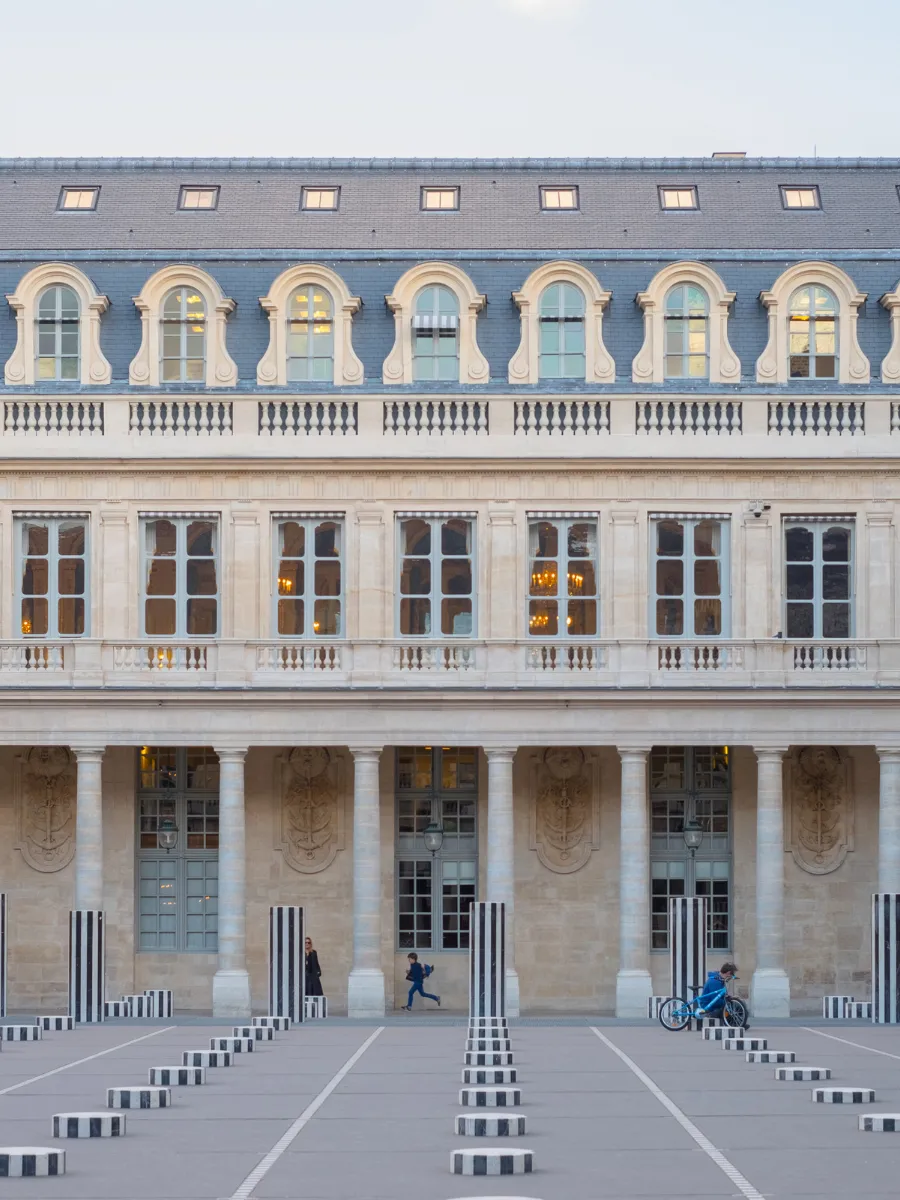
Cross over toward the Palais-Royal. The gardens open early and are practically deserted before ten o'clock—a striking contrast to the main courtyard and its Buren columns, which are always crowded in the afternoon.
Walk around under the arcades. The galleries house long-established shops, bookstores, and a few workshops that you wouldn't notice from the garden.
10:30 AM — The Louvre Museum
From the Palais-Royal, the Louvre is a six-minute walk. Enter through the Porte des Lions or the Richelieu passage rather than the pyramid if you have a ticket: the lines are significantly shorter there.
Two practical tips. Focus on two or three departments rather than trying to see everything—the Louvre is meant to be visited in several trips, never just one. And book online: access without a timed ticket has become difficult.
Allow two to three hours.
2:00 PM — Lunch and the Tuileries Garden
Exit on the Tuileries side. The garden is an extension of the museum and offers the best place in the area to take a break: green chairs around the fountains, chestnut-lined paths, and a view of the Place de la Concorde.
For lunch, head back up toward Rue Saint-Honoré or the streets around the Place du Marché Saint-Honoré—the options there are better than in the immediate vicinity of the museum.
4:00 PM — Bourse de Commerce – Pinault Collection
Head back down toward the Bourse de Commerce. Under its historic rotunda and glass dome, the Pinault collection presents contemporary art within a concrete cylinder inserted by Tadao Ando into the heart of the building.
It is the perfect counterpoint to the Louvre: a short visit, about an hour, in a place where the architecture alone is worth the detour.
6:00 PM — The covered passages
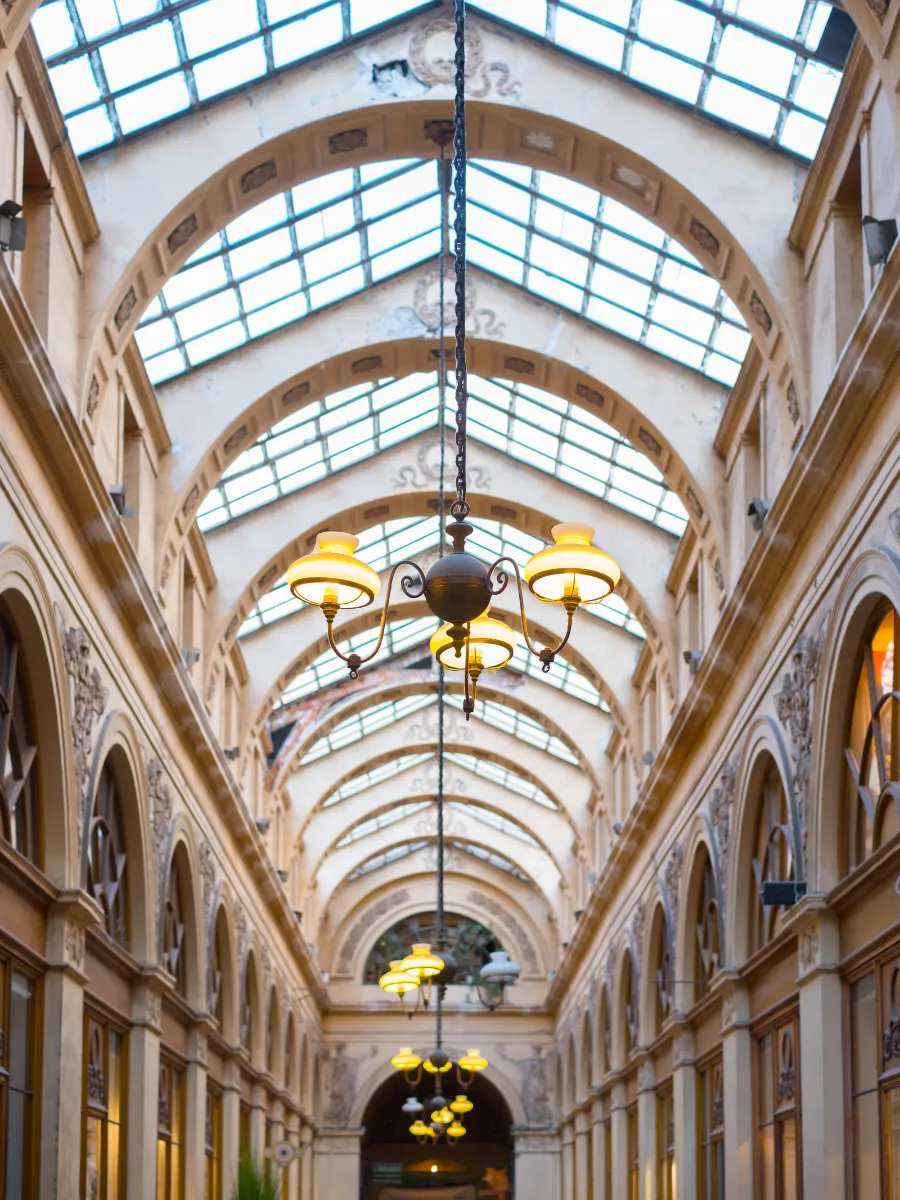
Head up toward the Galerie Vivienne, a seven-minute walk away. Mosaic floors, a barrel-vaulted glass roof, and historic shops: it is one of the most beautiful covered galleries in Paris, and one of the least crowded at the end of the day.
Continue to the Passage du Grand-Cerf, a 12-meter-high glass-roofed arcade from 1825 that houses artisan and designer workshops. The two passages are five minutes apart.
8:00 PM — Dinner around Montorgueil
The neighborhood has a high density of great restaurants, from Rue Montorgueil to Rue Tiquetonne, Rue Saint-Sauveur, and Rue Bachaumont. Make a reservation: this area is popular with Parisians, not just visitors.
For a final drink, the streets around Place des Victoires and Le Sentier are home to many local bars.
Day 2
9:00 AM — Place des Victoires
Start at Place des Victoires, one of Paris's five royal squares. With its uniform classical facades, circular layout, and central equestrian statue, it is a 17th-century composition that remains almost intact—and is curiously overlooked by many.
From there, Rue Étienne Marcel and Rue du Louvre are home to a large portion of the neighborhood's shops.
10:30 AM — Saint-Eustache and the Forum
Head to the Church of Saint-Eustache, located on the edge of the Nelson-Mandela garden. Gothic in structure and Renaissance in decor, it is one of the largest churches in Paris and one of the few monumental remnants of the Les Halles district from before its reconstruction.
The garden and the Forum's Canopée, right next door, showcase the area's contemporary side—a contrast that perfectly captures the spirit of the neighborhood.
12:00 PM — The Seine and Île de la Cité
Head down toward the riverbanks via Rue du Louvre or Rue de Rivoli. Cross the Pont-Neuf, the oldest bridge in Paris, and stop at the Square du Vert-Galant at the tip of the Île de la Cité—one of the most peaceful vantage points on the Seine.
Continue toward Sainte-Chapelle and Notre-Dame if you have the time.
2:30 PM — Le Marais
Head up toward Le Marais via Rue de Rivoli, then turn into Rue du Temple, Rue des Rosiers, and Rue Vieille-du-Temple. With its private mansions, courtyards, independent boutiques, and galleries, the best way to explore the neighborhood is to wander aimlessly through its streets.
The Centre Pompidou is on the way, just twelve minutes from the center of the 1st arrondissement.
5:00 PM — Return via Rue de Rivoli
Head back toward the 1st arrondissement along the arcades of Rue de Rivoli, passing by the Louvre. In the late afternoon, the light on the north facade and the Tuileries is the best of the day.
7:00 PM — A final drink in the neighborhood
The Victoires–Sentier area is the place that stays lively in the evening, with its wine bars and bistro counters. It is also the quietest spot to end the day without having to travel far.
What to know before you go
Walk. That is the whole point of this neighborhood. Taking the metro would be a waste of time for almost all the routes described here.
Start early. The Louvre, the Palais-Royal, and the covered passages are transformed by the time of day. Nine in the morning and four in the afternoon offer two very different experiences of the neighborhood.
Book ahead. The Louvre, the Bourse de Commerce, and popular dinner spots fill up quickly, especially on weekends.
Check closing days. The Louvre is closed on Tuesdays, as is the Bourse de Commerce. Plan your itinerary accordingly.
Have a rainy-day plan. The covered passages, the Forum, and the Centre Pompidou make the neighborhood easy to navigate in any weather.
Where to stay for this itinerary
The value of this itinerary relies entirely on one thing: staying within the area. If you stay elsewhere, you will lose an hour a day commuting, and more importantly, you will miss out on the early morning hours, which are the best.
Hôtel Odyssey, at 19 rue Hérold, is a great base for this type of trip. It is located right in the center of the route described here: 4 minutes from the Palais-Royal, 3 minutes from the Place des Victoires, 5 minutes from Montorgueil and the Bourse de Commerce, 10 minutes from the Louvre, and 6 minutes from Châtelet-Les Halles. Rue Hérold is quiet and tucked away from the busy main streets, which matters when you’ve been walking all day.
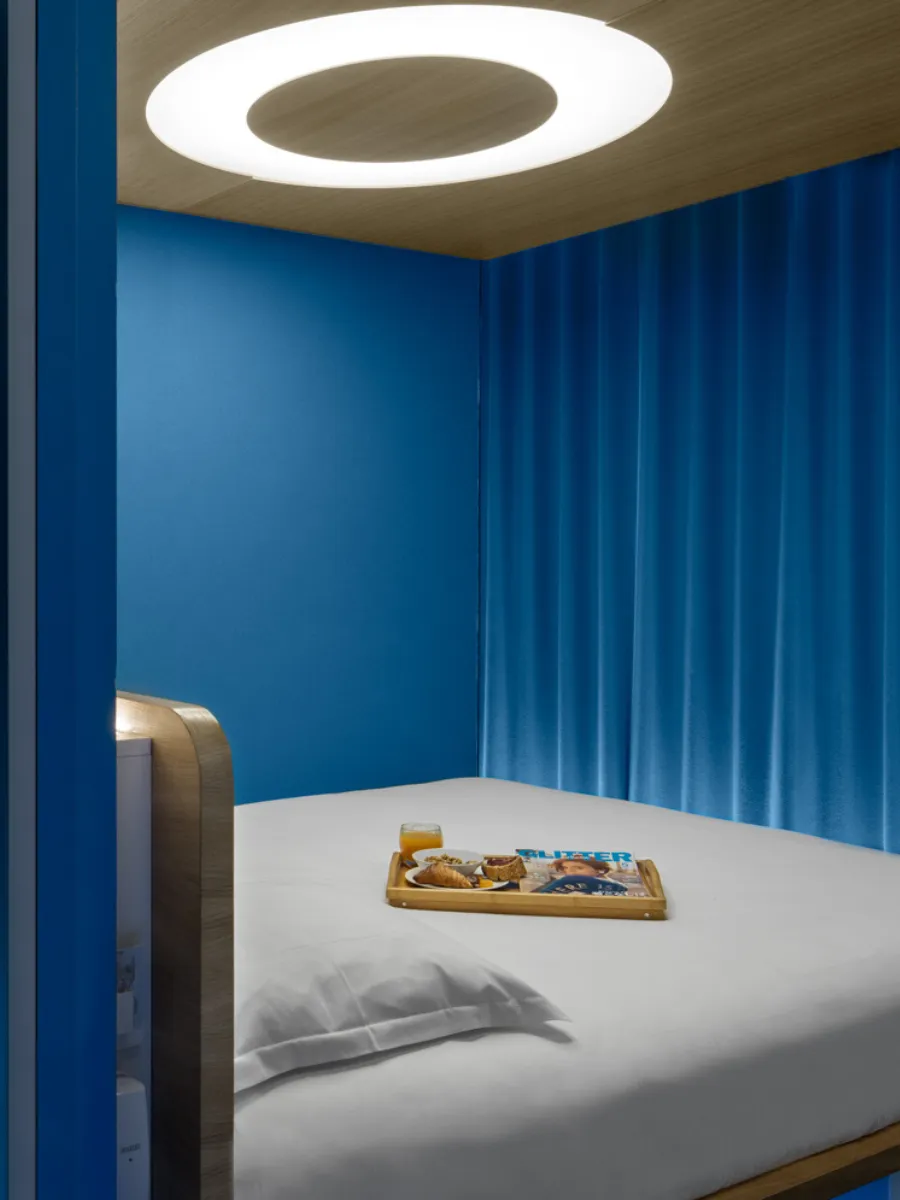
It is also the only design capsule hotel in the neighborhood. Its 29 rooms were entirely conceived by designer Ora-Ïto, with each one featuring a different color palette: 29 rooms, 29 colors. There are three room types ranging from 12 to 19 m², two of which overlook the courtyard. The property is a 3-star hotel with the EU Ecolabel certification.
For a two-day trip spent mostly outdoors, it is a sensible trade-off: compact but thoughtfully designed rooms in exchange for a location where everything is within walking distance.
More articles
FAQ
Yes, absolutely. The Louvre, the Palais-Royal, the covered passages, the Bourse de Commerce, Montorgueil, the Seine, and the Marais are all within a twenty-minute walk.
Plan on two to three hours if you focus on two or three departments. A comprehensive visit would take several days.
The covered passages (Galerie Vivienne, Grand-Cerf), the Louvre, the Bourse de Commerce, the Forum des Halles, and the Centre Pompidou offer enough to keep you sheltered for an entire day.
Before 10:00 AM. The gardens and the courtyard with Buren's columns are nearly deserted, which is no longer the case later on.
In the 1st arrondissement, preferably in the Palais-Royal – Victoires – Les Halles area, from where the museum is accessible in about a ten-minute walk.
Not for this itinerary, which is entirely on foot. A single ticket is sufficient for travel to and from train stations or airports.